
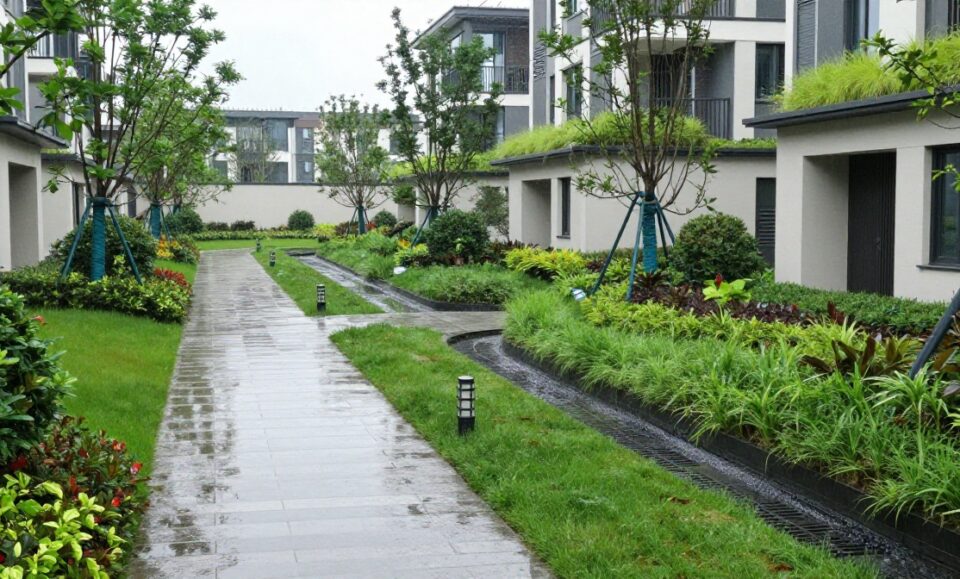
In the United Kingdom, rain is more than just a conversation starter; it is a fundamental factor that dictates how we build, where we live, and how our infrastructure functions. When a new development is proposed, whether it is a single bespoke dwelling or a sprawling industrial estate, one of the most critical hurdles to clear is how to manage the water that falls from the sky. This is where a professional Surface Water Drainage Design becomes indispensable. It is not just about moving water from point A to point B; it is about ensuring that the introduction of man-made structures does not adversely affect the local environment or increase flood risk for neighbours.
Historically, drainage was often an afterthought, something hidden away in pipes and sent straight to the nearest river. However, as our climate changes and urban areas become more densely packed, this old-fashioned approach is no longer sustainable. Modern design focuses on mimicry, attempting to replicate the natural way land handles water before it was covered in tarmac and roof tiles. When you replace a grassy field with a concrete driveway, you remove the ground’s natural ability to absorb water. Without a carefully calculated strategy, that water has nowhere to go but into the street or into someone else’s basement.
The core principles of modern drainage strategies
At its heart, a successful drainage strategy is about balance. Engineers must calculate the ‘Greenfield runoff rate,’ which is essentially the speed at which water would naturally flow off the site in its undeveloped state. The goal of any new project is to ensure that the post-development runoff does not exceed this original rate. To achieve this, designers use a variety of tools and techniques to slow the water down, store it temporarily, and release it at a controlled pace.
When embarking on a development project, securing a professional Surface Water Drainage Design is often the difference between a smooth planning process and a costly rejection. Local Planning Authorities (LPAs) and Lead Local Flood Authorities (LLFAs) have become increasingly stringent. They require detailed evidence that a project will not contribute to downstream flooding, especially during extreme weather events which are becoming more frequent. This usually involves complex hydraulic modelling to simulate how the system will perform during a ‘1-in-100-year’ storm event, with an added allowance for future climate change.
The rise of Sustainable Urban Drainage Systems
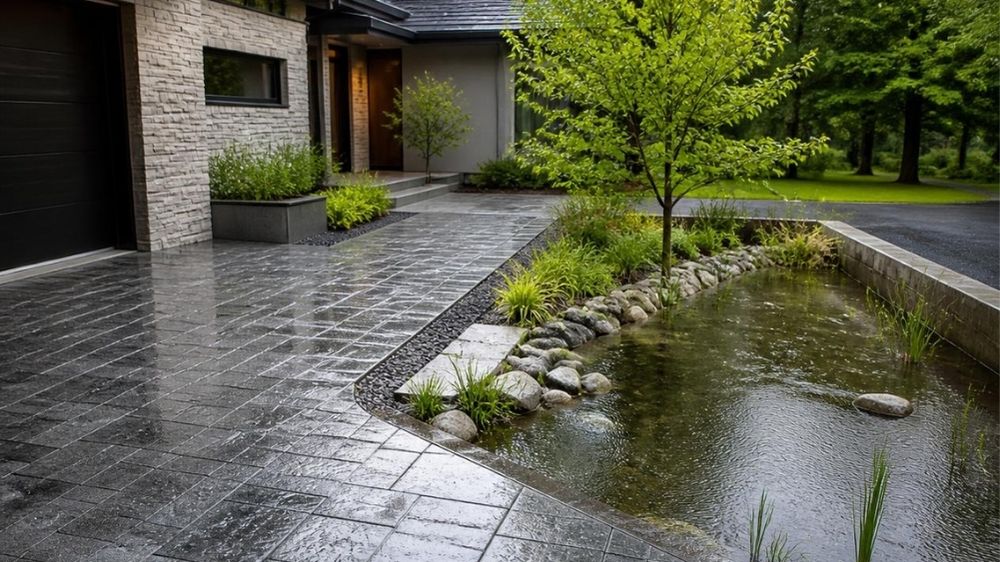
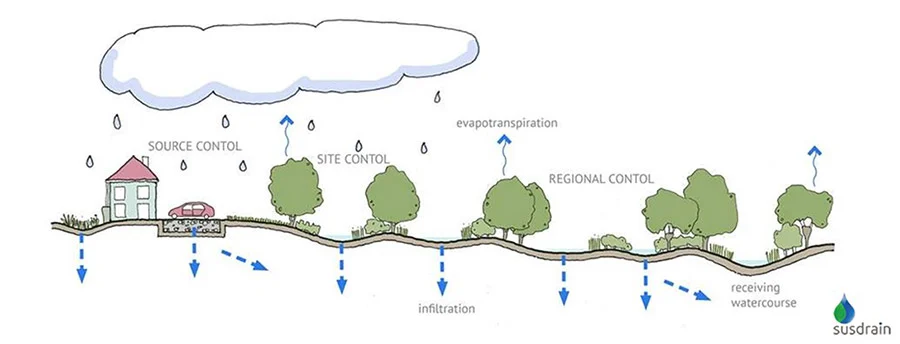
You may have heard the term SuDS mentioned by architects or planners. Sustainable Urban Drainage Systems represent a shift in philosophy. Instead of just seeing surface water as a waste product to be disposed of, SuDS treats it as a resource. The aim is to manage water as close to its source as possible. This approach provides multiple benefits beyond just flood prevention, including improvements in water quality, biodiversity, and the aesthetic appeal of a development.
- Source Control: Techniques like green roofs and rain gardens that capture water right where it falls.
- Permeable Surfaces: Using gravel or porous paving blocks that allow water to soak through into the ground rather than pooling on top.
- Infiltration: Using soakaways to return water directly to the soil, provided the ground conditions are suitable.
- Attenuation: Storing water in underground tanks or open ponds during heavy rain and releasing it slowly via a flow control device.
Navigating the planning and regulatory landscape
One of the most common reasons for delays in the planning process is a lack of detailed drainage information. Many developers mistakenly believe that drainage is something to be sorted out during the construction phase. In reality, the drainage strategy needs to be integrated into the site layout from the very beginning. If you wait until the buildings are already designed, you might find there is no room left for the necessary attenuation tanks or swales, forcing a total redesign of the site.
Building Regulations, specifically Part H, set out the hierarchy for surface water disposal. This hierarchy is a legal requirement that designers must follow in order of priority. You cannot simply choose the easiest or cheapest option; you must prove why the higher-priority methods are not feasible for your specific site. The hierarchy generally follows this order:
- Disposal via infiltration into the ground (e.g., a soakaway).
- Disposal to a watercourse (e.g., a stream or river).
- Disposal to a surface water sewer.
- Disposal to a combined sewer (this is the last resort and often heavily discouraged).
To prove that infiltration is or isn’t possible, a percolation test (often called a BRE 365 test) is required. This involves digging a pit on-site, filling it with water, and timing how long it takes to drain away. If the soil is heavy clay, infiltration likely won’t work, and the designer must move to the next step in the hierarchy. Having this data early in the process prevents expensive surprises later on.
The technical components that make it work
A comprehensive drainage design is a combination of civil engineering and environmental science. It requires a deep understanding of topography, soil mechanics, and hydrology. Engineers use sophisticated software to map out the entire network, ensuring that every pipe is at the correct gradient and every storage volume is sufficient to handle the calculated load. There are several key components that typically feature in these designs.
Flow control devices, such as vortex regulators (like a Hydro-Brake), are essential. These clever pieces of kit restrict the flow of water out of a site to a specific litre-per-second rate. Even if the storage tanks behind them are full to the brim, the device ensures the discharge remains constant and manageable for the downstream network. Without these, even the largest storage tanks would eventually overwhelm the local sewers during a prolonged storm.
Another often overlooked aspect is water quality. Surface water running off roads and car parks often carries pollutants like oil, heavy metals, and silt. A well-designed system will include ‘treatment stages’—such as oil separators or vegetative swales—to clean the water before it is released back into the natural environment. This is a key requirement of the SuDS Manual (CIRIA C753), which serves as the industry standard for best practice in the UK.
Common challenges in urban environments
Designing for a rural ‘greenfield’ site is one thing, but urban ‘brownfield’ sites present a whole different set of challenges. In cities like London or Manchester, space is at a premium, and the ground is often criss-crossed with existing utilities, historical foundations, or even contaminated soil. In these scenarios, designers have to be incredibly creative. This might involve using ‘blue roofs’—where the roof of a building is designed to temporarily hold water—or installing geocellular crates beneath parking areas to provide high-volume storage in a small footprint.
Maintenance is another critical factor that must be addressed in the design stage. A system that works perfectly on paper but is impossible to clean or inspect will eventually fail. Designers must ensure that there is adequate access for jetting equipment and that any silt traps are easily reachable. For larger developments, a formal maintenance schedule is usually required as part of the planning conditions, outlining who is responsible for the upkeep of the system for the lifetime of the development.
Ultimately, the goal is to create a system that is invisible and reliable. When a drainage design is executed correctly, the residents or occupants of a building will never even have to think about it. The water will flow where it is supposed to, the ground will remain stable, and the local environment will be protected from the risks of flooding and pollution. Investing in a high-quality design at the outset is not just a regulatory necessity; it is a fundamental part of building resilient, sustainable communities for the future.

Elina Villante is a property writer who focuses on home buying trends, rental market insights, and practical advice for navigating the real estate world. Her work simplifies complex processes to help readers make informed decisions.


